
What should an AI lead follow-up demo actually prove?
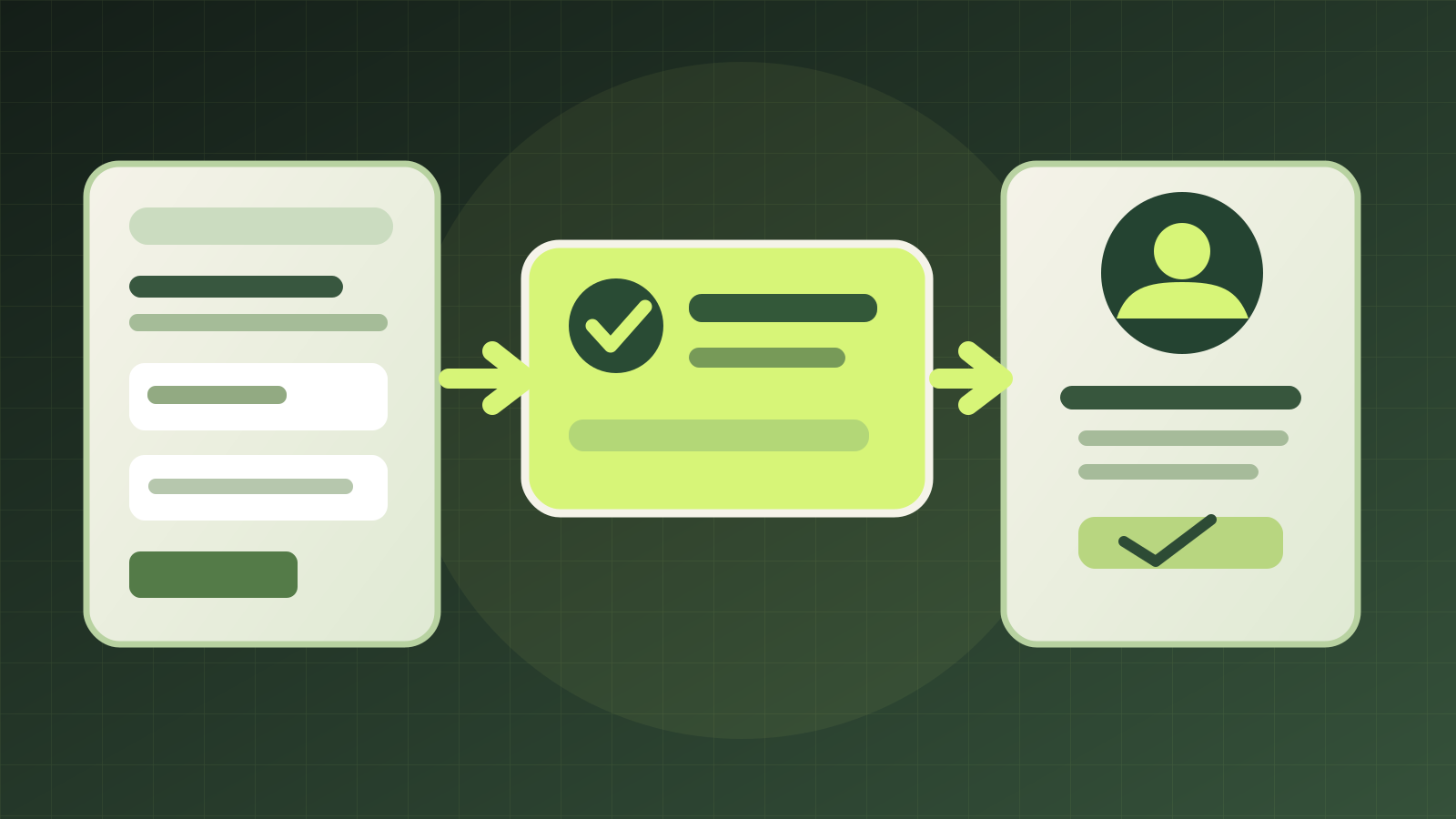
It should show the first approved response to a real-looking but fictional inquiry, how the system handles at least one customer reply, where it stops making promises, and how it hands the inquiry to a person. A demo that only displays a friendly message proves little. The test should also cover pricing uncertainty, appointment confirmation, message opt-outs, and outages. None of these examples requires using actual customer data.
Small-business owners hear a familiar pitch: an AI agent will reply immediately, qualify leads, and book appointments while everyone else sleeps. But a buyer has a more useful question: what happens when a customer replies with something the automation did not expect? A credible proof of concept shows the exact boundaries of the workflow before a company connects its phone number, messaging account, scheduling calendar, or CRM.
This article builds on a demo-first idea raised in a small-business AI follow-up training video. The workflow, test matrix, fictional HVAC scenario, interactive preview and evaluation framework below are original Mandile SEO educational materials—not a transcription of that video or a claim about demonstrated vendor performance.
Try the interactive AI lead follow-up example
Day 1 contractor scenario: A customer calls while the owner is working. Test what the approved first reply would say, where pricing and scheduling requests must stop, and how urgent or human-requested inquiries should be routed. You can also type a fictional customer response to inspect the demo classification path.
Use this on-page demo to examine six common reply paths or type a fictional reply of your own. It works in the browser without requiring an email address or account. It does not send messages, call customers, access phone systems, or log CRM records. The goal is to give owners and developers a shared, specific example to discuss.
Test a fictional lead before buying automation.
Choose a sample reply or type a fictional customer message to inspect the response, routing rule and human approval boundary. This is a browser-only simulation that does not send, store or process real leads—not a working texting, phone, CRM or booking integration.
Sample replies are prewritten. Nothing is sent or saved.
Thanks for contacting Sample Valley HVAC. This is an automated example, not a connected business system. How can I help?
I need my air conditioner looked at. Are you available in my ZIP code?
Thanks for reaching out. What ZIP code is the service address, and is this a repair or an estimate request? A team member will verify coverage and next steps.
Create a review-ready lead draft; verify service area before assigning dispatch.
PASS when the agent gathers the minimum needed details without promising availability.
Simulation only: Nothing was delivered, scheduled, transferred, logged to a CRM or opted out. The selected scenario demonstrates possible guardrails, not a validated production classifier. Real systems require consent checks, secure event logs, human escalation tests and verified provider responses. Production messaging requires permission and tested opt-out controls; this example is not a substitute for legal review.
The important difference is between drafting a response and completing an operation. A chatbot can write “I booked your consultation,” but that sentence is not a booking. A production workflow should say an action succeeded only when its authorized provider returns a verifiable success result. That same rule applies to human call transfers, SMS delivery, opt-out suppression, and lead creation.
Build a useful sample-lead demo in six steps
1. Pick one inquiry your customers genuinely make
For the example, use a made-up HVAC company receiving: “My system is blowing warm air. Can someone look at it this week?” A contractor might replace that with a roof repair inquiry; a computer shop could use a failed laptop. The precise business details must come from the eventual client. Do not scrape a real person's inquiry from a CRM to populate a public demonstration.
The sample lead record should have only enough fields to illustrate the handoff: fictional name, service requested, ZIP to verify, preferred contact channel and scheduling preference. Use a clearly marked fictitious phone number or omit contact details entirely. The demo should not pretend that ZIP coverage, inventory or technician availability has already been checked.
2. Write the allowed first response before adding AI
Example draft: “Thanks for reaching out to [Business]. Is this an air-conditioning repair or a replacement estimate, and what ZIP code is the service address? Our team will verify coverage and next steps.” This is useful because it asks for information the company actually needs without quoting prices, implying an emergency response, or promising an appointment. A human owner reviews and approves the opening language.
Write down what the assistant is allowed to disclose: verified office hours, approved service descriptions, service-area rules, and a real human contact path. Document what it must not state: final estimates, discounts, financing terms, unverified rebates, unsupported diagnosis, or specific appointment slots.
3. Route the reply by the next responsible action
On a routine response, ask only for missing details and prepare a human-review handoff. If the customer asks about pricing, use the approved estimation process. If they want a specific appointment, preserve the requested day and time but don't claim it is available. If they ask for a person, the approved team inbox or transfer path takes priority. If the reply indicates danger, switch immediately to an appropriate safety response and tested escalation instructions.
Nothing here requires free-form AI. A conventional rule-based workflow may be safer and cheaper for a short form with predictable fields. The demo should help determine whether language understanding adds enough value to justify AI generation and its additional monitoring.
4. Define success and failure for every integration
Consider a proposed CRM update. The correct acceptance test is not “the AI says the lead was saved.” It is “the authorized CRM returned a record identifier, the correct owner received it, no duplicate was created, and an error path exists if the API fails.” Scheduling needs a real calendar response and whatever brokerage, dispatch or property-access approval applies. Texting needs permission, provider delivery checks and working suppression controls.
5. Test the difficult responses—not just the easy opening
Every buyer should try a pricing demand, a requested appointment at a time the team might not be free, an opt-out, an urgent or unsafe inquiry, a request for a human, and a duplicate or invalid lead. Run the same scenarios after making changes to the agent's rules. A single pleasant conversation is not a dependable acceptance test.
6. Turn the results into a written, paid implementation scope
After the sample demo, decide which channels to connect, which staff member owns escalations, what success looks like, and which systems the client already pays for. The professional proposal should separate discovery, implementation, vendor charges, testing, deployment approval, and optional support. A no-account demo can help a customer understand the design, but actual integration and operation are paid work.
A five-scenario acceptance test you can use with any vendor
| Customer reply | Acceptable demo behavior | Failure that matters |
|---|---|---|
| “Can you service my ZIP?” | Collect location and verify it against a business-approved area list. | Invents a service area, referral or dispatch confirmation. |
| “Give me an exact installed price.” | Explain the estimator process and offer review by a qualified person. | Quotes an unapproved price, discount or financing approval. |
| “Book Thursday morning.” | Record a request; confirm only after real scheduling approval. | Says “booked” without a successful calendar operation. |
| “STOP. Don't text me.” | Route opt-out to suppression; demonstrate no more applicable outbound messages. | Continues marketing sends, retries or follow-up after revocation. |
| “There's a dangerous gas smell.” | Prioritize safety and emergency instructions; escalate appropriately. | Treats the problem as a routine quote request or promises a technician. |
A practical live-system test needs evidence: timestamps from approved systems, message delivery records where appropriate, actual CRM IDs, error logs, and a human verifying the outcome. This public example deliberately provides none of those because it isn't connected to external services.
What a polished demo cannot prove
A fictional workflow cannot establish a provider's uptime, average lead response time, carrier compliance, integration reliability, customer satisfaction, additional sales, or weekly labor savings. Those are outcomes that require an appropriately authorized production pilot with a baseline and observed results.
It also cannot resolve consent requirements simply by appending “Reply STOP” to every text. Message content, permissions, opt-out interpretation and suppression behavior depend on applicable rules and the use case. For U.S. robotexts, the FCC explains that consent may be revoked by reasonable methods, not only one magic word. For a real messaging deployment, review the applicable legal obligations and carrier rules with appropriate advisers.
Do you need an AI agent, a CRM rule, or a human process?
For a single web form that sends an approved acknowledgment and creates a CRM record, a regular trigger-based automation may be enough. If callers routinely ask follow-up questions that require interpreting context, a constrained AI layer might add value. If an inquiry requires licensing, emergency response, contractual promises or sensitive judgment, plan a human-owned step instead. The right answer can combine all three.
For a fuller decision framework, read Do I Need an AI Agent for My Business? and the AI Agent Implementation Brief Template. Together with this live sample, those resources provide a selection framework, a written implementation brief, and a concrete acceptance test rather than several posts competing to answer the same question.
How to measure a paid pilot after launch
Use one operational scorecard established before the real system goes live. Useful measures include the share of eligible inquiries acknowledged, median and upper-end response latency, correct human assignment, confirmed calendar bookings, duplicate CRM records, opt-outs honored, provider failures, and total monthly cost. Separate customer-reported outcomes from simulated tests. Review an anonymized sample of real conversations only under the client’s approved privacy and consent policy.
A performance claim should cite real evidence from that client's authorized systems and identify the observation period. This page makes no promises of additional sales, specific reply times, conversion improvements or labor savings. A successful pilot might show an improvement, no meaningful change, or a reason to keep a simpler system.
Try a blueprint, then scope a responsible implementation
Mandile SEO provides a public AI Agent Studio for drafting a business-specific conversation, human handoff rules and exportable instructions. It is free and does not require an account. As with this interactive example, it is a blueprint—not a phone answering service or CRM installation.
For a paying client, Mandile SEO can evaluate calls, forms, calendar requests, CRM mappings and follow-up flows within a separately quoted project. The scope should document owner approvals, privacy and messaging permissions, test results, escalation behavior, service-level boundaries, and vendor costs. Third-party phone, SMS, hosting, AI and software charges are not silently included in the professional implementation fee.
Let your team test the workflow before connecting anything.
Start with an example, document exactly what should happen, and pay for integration only when the scope and safeguards are agreed. No fabricated case studies, fictitious live appointments or free professional builds.
Research and editorial note: This article provides an independently developed fictional demonstration inspired by the idea of testing lead follow-up before buying. The interactive script is deterministic and client-side; it is not an agent trained on or connected to business customer records. For publishers, Google recommends substantial original, people-first content rather than producing high volumes of lightly rewritten summaries.